
In a world that glorifies being busy, discover the profound benefits of scheduling time for intentional boredom.
We live in an era of constant input and endless stimulation. From the moment we wake to the moment we sleep, our attention is pulled toward screens, tasks, noise and our minds are frantically processing a never ending stream of notifications. We wear our exhaustion like a badge of honor, equating “busy” with “important” and “silence” with “laziness.“
We live in a society that celebrates productivity, where our worth is often measured by how much we can get done in a day, how many projects we’re juggling, and how fast we can move from one task to the next.
With constant notifications, endless entertainment, and work life lines continually blurring, the idea of doing “nothing” feels almost rebellious.
Productivity is prized, hustle is celebrated, and idle time is often viewed as wasted time. But what if boredom isn’t the enemy? What if the very thing we avoid; boredom, is actually a secret ingredient or catalyst for creativity, insight, and mental renewal?

The Science Behind Boredom and Creativity
Research suggests that boredom isn’t a sign of laziness; it’s a cognitive nudge. When our brains aren’t overloaded with information, they begin to explore. Daydreaming activates the brain’s default mode network (DMN), a system linked to imagination, idea generation, and deeper problem solving. In these quiet spaces, our minds connect dots that are usually drowned out by noise.
Some of the world’s most groundbreaking ideas didn’t come from a brainstorming session or a packed calendar; they emerged during long walks, silent moments, and pauses in everyday life.
Research in psychology and neuroscience supports what intuition has long suggested. Studies have shown that people who engage in undemanding, boring tasks; like folding laundry or taking a shower, often experience a surge in creative insight afterward. This is because boredom reduces cognitive load, freeing up mental resources for associative thinking. When we’re not focused on a specific input, our minds can explore, imagine, and invent.
In one notable experiment, participants who were asked to complete a boring task before taking a creative problem solving test, performed significantly better than those who engaged in a demanding or entertaining activity first. Boredom, it seems, primes the brain for originality.
For centuries, artists, scientists, and thinkers have understood the creative power of the unfocused mind. Newton developed his theory of gravity while in isolation during the Great Plague. J.K. Rowling conceived Harry Potter during a delayed train journey with nothing but her thoughts. These weren’t merely coincidences; they were moments where boredom served as a blank canvas for the imagination.
Why We Fear Stillness
Many people avoid boredom because it forces self-reflection. Stillness invites our deepest thoughts to surface; fears, ambitions, unanswered questions. It’s often easier to drown those thoughts with distractions. But discomfort is a pathway to discovery. Artists, scientists, and innovators throughout history have embraced quiet as part of their process.
We must unlearn the belief that doing nothing has no value.
What Is Intentional Boredom?
Intentional boredom is not about laziness or apathy. It is the deliberate act of disconnecting from external stimuli and allowing the mind to wander without a goal. It means putting down the phone, stepping away from the to-do list, and simply being with your thoughts, even if it feels uncomfortable at first.
In this space of mental “idling,” something remarkable happens. The brain’s default mode network; a region linked to daydreaming, introspection, and creative thinking, kicks into high gear. Without the constant demand to react, process, or produce, the mind begins to make unexpected connections, revisit unresolved problems, and generate novel ideas.
Intentional Boredom: A Powerful Creative Tool
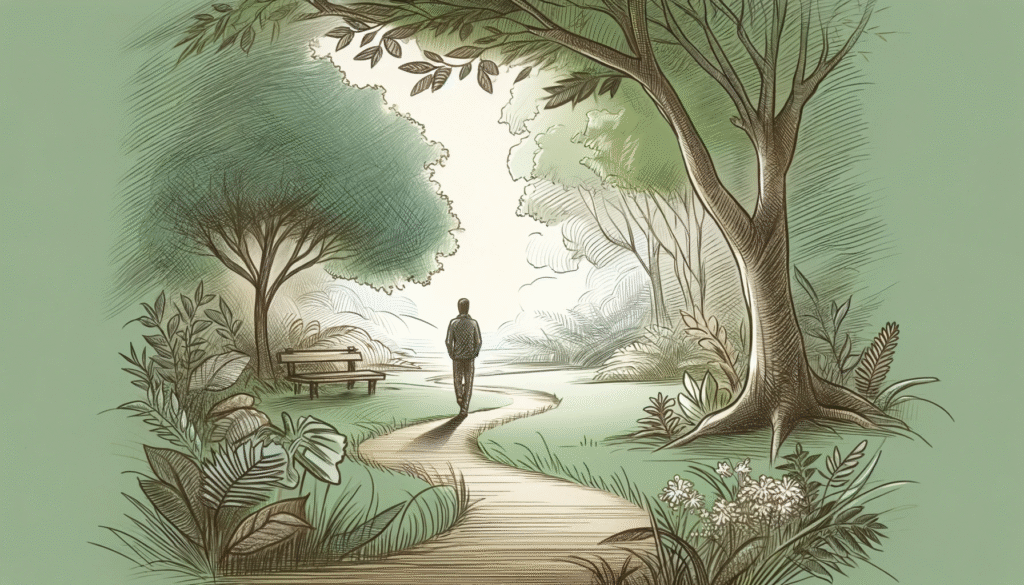
Doing nothing doesn’t mean scrolling through social media or binge watching shows. It means allowing your mind to wander freely without feeding it constant stimuli. Intentional boredom might look like:
- The “Tech-Free” Transition: We usually fill the gaps in our day; waiting for the elevator, standing in line for coffee, sitting on the toilet, with our phones. reclaim these micro-moments. Keep your phone in your pocket. Observe the room. Let your mind wander.
- Sitting quietly with no screens.
- Taking a slow walk with no destination.
- Lying on the couch and letting your thoughts drift.
- Journaling whatever comes to mind.
- Staring out a window and observing your surroundings.
These activities create valuable mental whitespace; the birthplace of imagination.

How to Cultivate Creative Boredom
If you’re ready to embrace the art of doing nothing, here are a few ways to start:
- Schedule “White Space”
- Block out 10–15 minutes a day with no agenda. No phone, no book, no podcast. Just sit, walk, or gaze out the window.
- Embrace Mundane Tasks
- Wash dishes without listening to anything. Take a walk without headphones. Let your mind roam while your hands are occupied.
- Practice Digital Detoxes
- Set aside periods where you consciously disconnect from devices. Even an hour a day can create mental room for new ideas to surface.
- Allow for Unstructured Time
- Resist the urge to fill every gap in your calendar. Leave room for spontaneity and thinking.
- Keep a Boredom Journal
- After a period of intentional boredom, jot down any thoughts, ideas, or reflections that emerged. You may be surprised by what arises.
The Benefits of Scheduling Stillness
By giving ourselves moments where productivity isn’t the goal, we gain:
- Enhanced Creativity: Fresh ideas surface in unexpected ways.
- Mental Clarity: Our minds filter what truly matters.
- Improved Problem-Solving: Solutions reveal themselves naturally.
- Emotional Reset: Stillness reduces stress and overwhelm.
- Self-Knowing: We reconnect with our values, goals, and inner voice.
You’re not wasting time; you’re investing in insight.
Making Space for Boredom in a Busy World
To embrace boredom, we must design for it. Start small:
- Block 10–15 minutes of “creative idleness” each day.
- Swap one hour of screen time for silence weekly.
- Practice mindfulness or gentle reflection during your commute.
- Plan device-free weekends occasionally.
- Give yourself permission to pause.
The Countercultural Courage to Do Nothing
The art of doing nothing isn’t about stepping away from life; it’s about stepping deeply into your imagination. True creativity rarely arrives on command; it flows when we stop forcing it. When we cease our constant running, we finally see the richness of the landscape around us. And when we put down our screens, we reconnect with the most essential part of ourselves.
In a culture that relentlessly equates busyness with worth, choosing boredom is a quiet, yet profound, act of rebellion. It is a deliberate commitment to nurturing your inner life in a world that prioritizes endless output over genuine insight. By intentionally disengaging from the constant hum, we don’t merely recharge our batteries; we create the fertile conditions for profound breakthroughs to emerge.
So, the next time you feel that familiar itch to reach for your phone in a quiet moment, I invite you to pause. Ask yourself: What brilliant idea or fresh perspective might my mind conjure if I simply give it nothing to do? The answer could very well be the spark of something truly beautiful and transformative.
So dare to unplug. Wander. Drift. Be bored.
Because in those rare, precious moments when the world finally quiets down, your most brilliant and impactful ideas are silently waiting to be discovered.
Sometimes, the most productive and revolutionary thing you can do is absolutely nothing at all.